
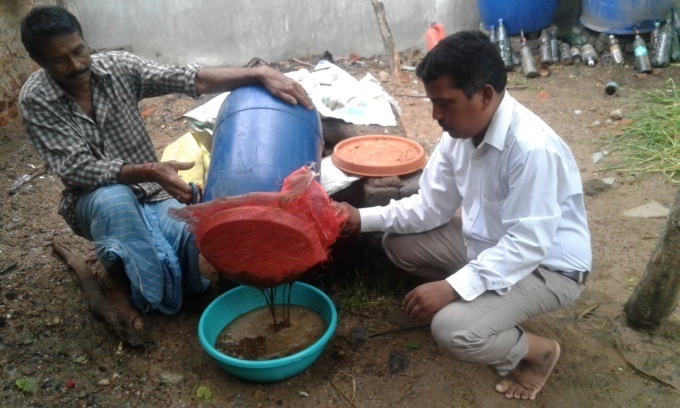
Bargarh district is famous for its commercial rice production known as rice bowl of Odisha. The farmers also grow seasonal vegetables which include cauliflower, cabbage, pointed gourd, brinjal etc. The district is among the top districts of Odisha with respect to consumption of fertilizers and pesticides (Odisha Agriculture Statistics, Directorate of Agriculture and Food Production, Odisha; 2013-14).
The application doses of pesticides sometimes are found 3 to 4 times of the recommended doses (primary data). Farmers also apply same formulation pesticides repeatedly. In addition to these, some pesticide companies are selling sub-standard formulations draining out the famers’ money. Recently Govt. of Odisha has banned 11 pesticide companies not to sell their products (Hindustan Times, 15th November 2017).
All these situations are creating an environment where most of the pathogens and insects are generating resistance against applied pesticides. Farmers are incurring a major part of their cost on pesticides. Sometimes farmers are becoming helpless on controlling disease-pest. Recent example of huge crop losses caused by Brown plant Hopper (BPH) in paddy crop causing number of farmer suicide cases and crop field burning by farmers. The time has reached to shift from pure chemical based farming to integrated approach and non-pesticide approach.
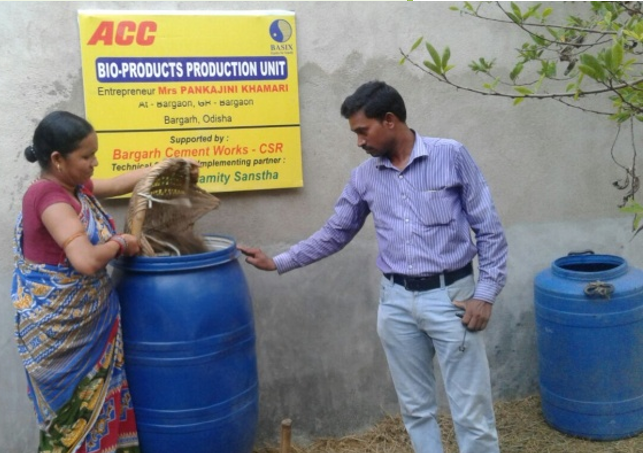 ACC Ltd, Bargarh Cement Works with partnership with BASIX Krishi Samruddhi Ltd (A BASIX group company) under Corporate Social Responsibility has initiated a programme to address such issues in the year 2014.
The programme is named as Low External Inputs for Sustainable Agriculture (LEISA).
The programme in the first year catered 100 farmers introducing integrated pest management (IPM) practices. Farmers were able to reduce 8-12 number of pesticide applications in paddy and vegetables with a reduce of cost of cultivation of Rs.1200 to Rs.3,000 per acre in different crops.
In the subsequent year, the number of farmers became double with a good response. In the year 2016, Non Pesticide Management (NPM) was adopted in seasonal vegetables and paddy with implementing partner as Sarva Seva Samity Sanstha (SSSS).